Our Montessori Bookshelf: Water Connects Us
Rebecca Lingo • March 30, 2026

Rivers are so important to our human story. They are sources of nourishment, transportation, and connection. We see how children are naturally drawn to water. Stories offer a powerful way to understand ecology, interdependence, and our place within the natural world, in addition to observing the seasonal changes of our wetland and raingarden on campus.


With this in mind, we want to share some of our favorite books about water, rivers, and watersheds. Through story and illustration, children can trace the journey of a single drop of water, observe how land and water shape one another, and begin to understand how human choices affect the health of our planet.


We’ve grouped the following collection of river and water-focused books by developmental stage: early childhood, elementary, and adolescent. Each title offers language, beauty, and meaningful context for deeper exploration. Whether you are reading with a toddler, an emerging researcher, or a young adult, these books invite wonder and reverence for one of Earth’s most essential elements.


For the Youngest
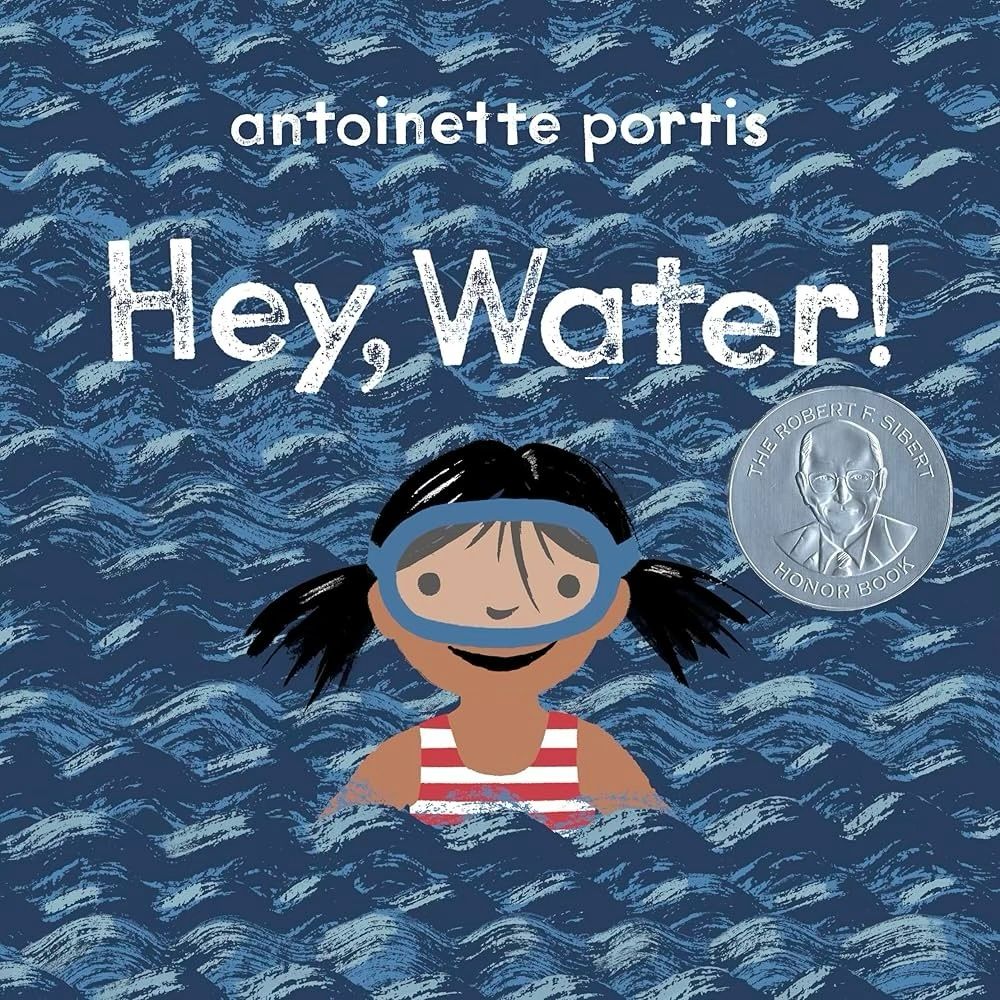

Hey, Water!

By Antoinette Portis


This picture book takes us on a journey of how water is part of our lives in so many ways: from sprinkler spray to a teardrop trickling. The clean-lined illustrations transition between bird’s-eye views and close-up images. This is a great transition book for toddlers moving from pages with one word labeling a picture to a narrative that connects to daily experience.
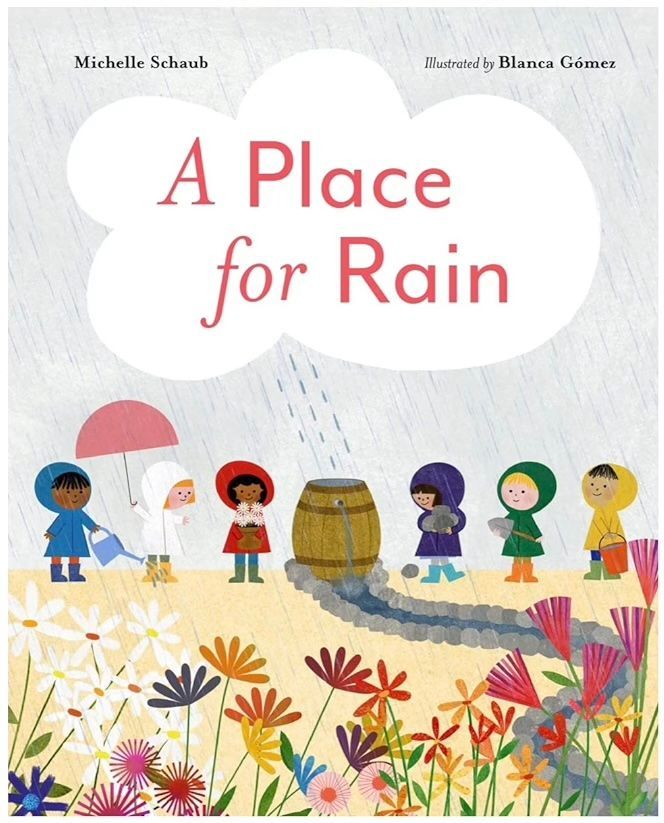

A Place for Rain

By Michelle Schaub, Illustrated by Blanca Gómez


A lovely introduction to the concept of rain gardens, this picture book follows a simple story of children witnessing how rain runoff can be transformed from being problematic into something stunning and special for everyone. The sweet, slightly geometric illustrations highlight how even simple actions can have a big impact.
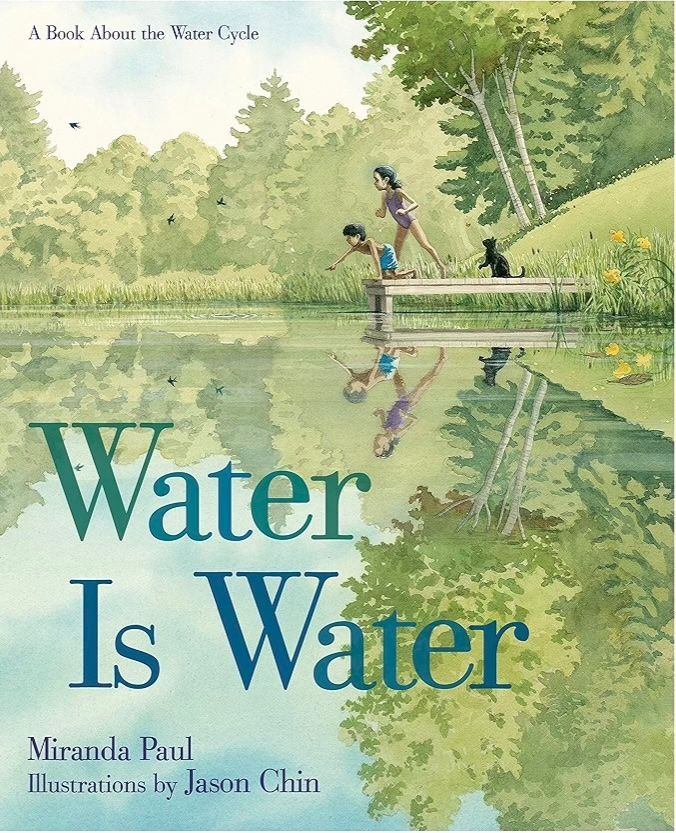

Water Is Water

By Miranda Paul, Illustrated by Jason Chin


Although a picture book about the changing states of water, the lyrical text and charming illustrations make this a delightful and fun-filled page-turner! It’s a great way to introduce young children to the water cycle and the importance of water in our lives. 


Water Cycle: For Younger Elementary
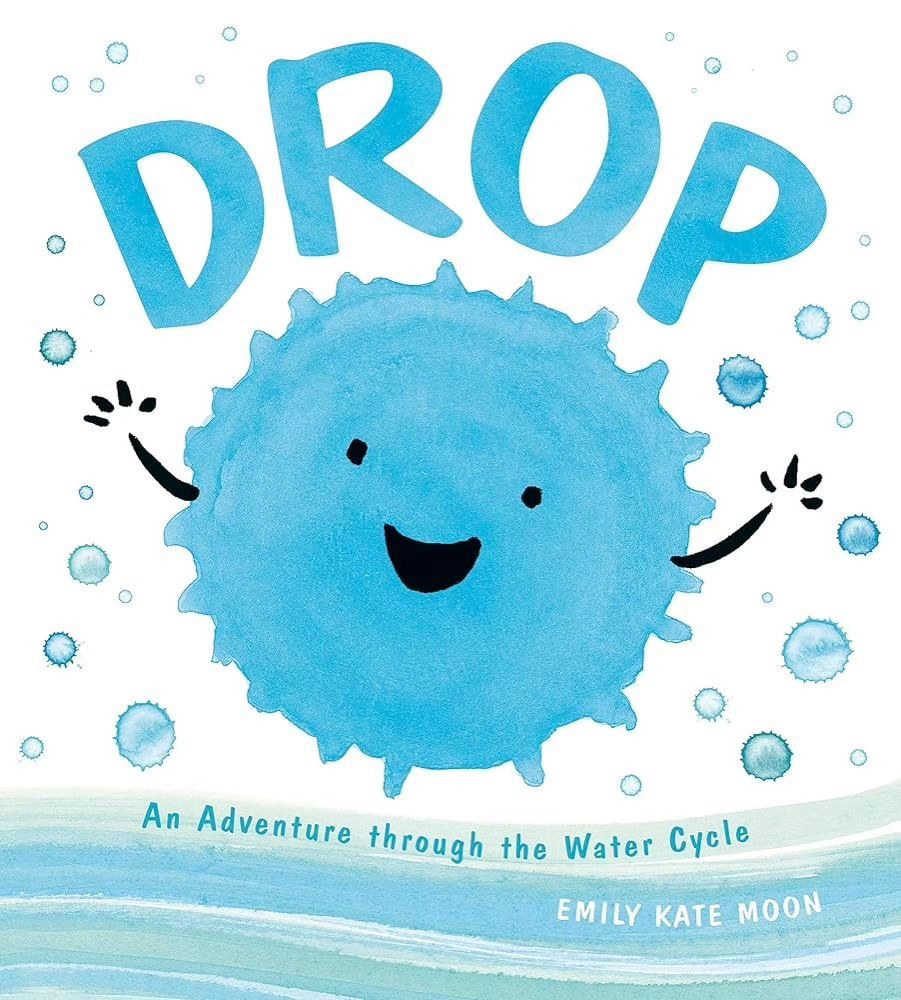

Drop: An Adventure through the Water Cycle

By Emily Kate Moon


Bridging between comic style and traditional picture book, the story follows the character, Drop, as she travels through the water cycle. Delightful and engaging, this is a great book for younger elementary children and can serve as an easy-to-access resource for understanding the states of water.
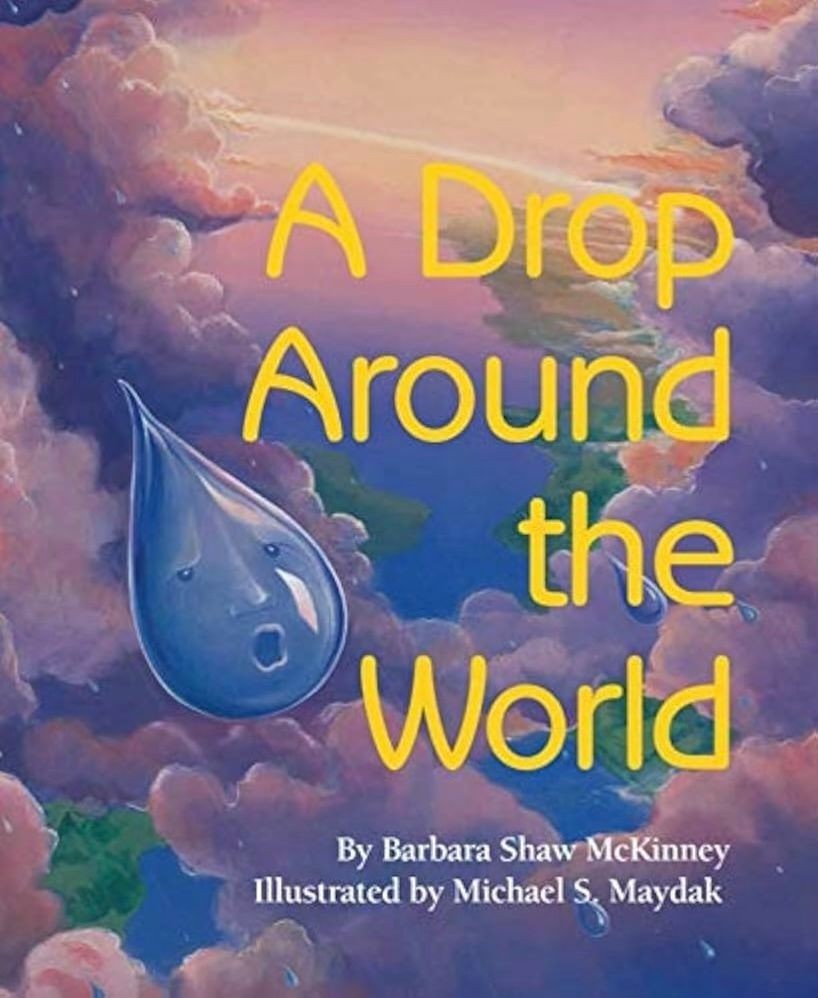

A Drop Around the World

By Barbara Shaw McKinney, Illustrated by Michael S. Maydak


Written in rhyming verse, this story follows Drop from a cloud near Maine around the world and back to Cape Cod Bay. A map inside the cover shows the journey, and emoji-style images accompany the text, linking to more detailed descriptions of the amazing science at each step along Drop’s path. 


Watersheds
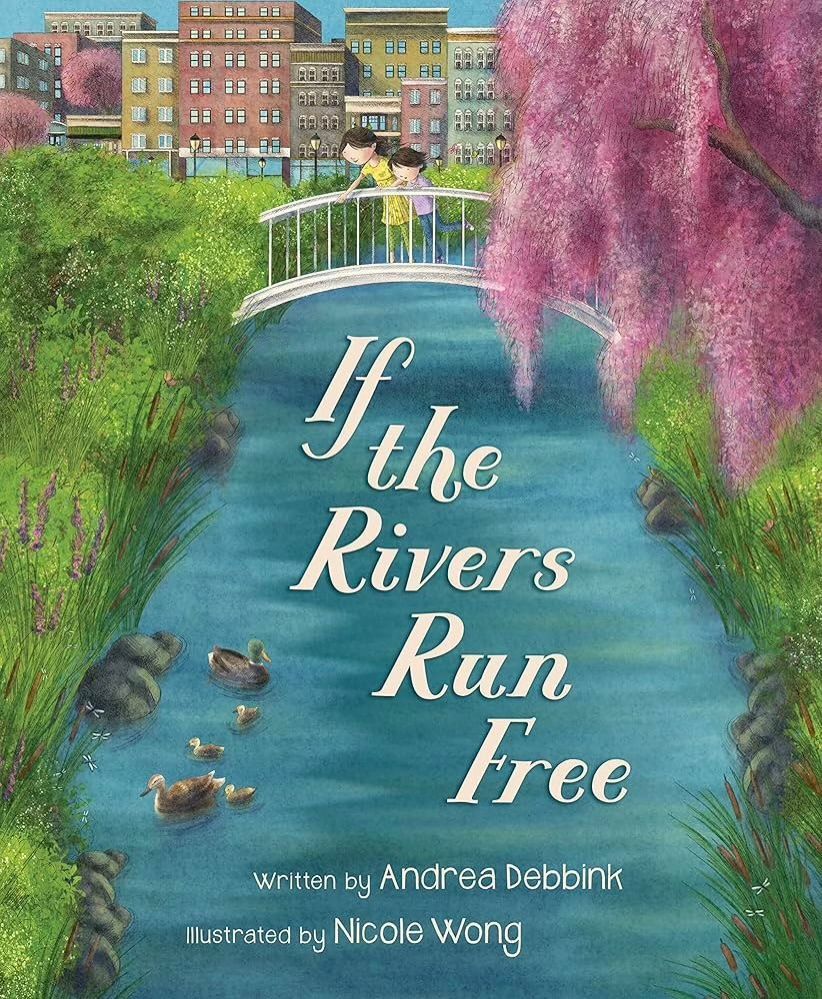

If the Rivers Run Free

By Andrea Debunk, Illustrated by Nicole Wong


This captivating picture book takes readers through the human story of rivers’ importance in our lives, the mistakes we’ve made, and how we can make things right and help rivers run free again. The rhythm of the text is accentuated by moments of human realization, with bold statements that step out of the rhyming pattern and gently jar us into a sense of action. The illustrations take readers on a journey, too!
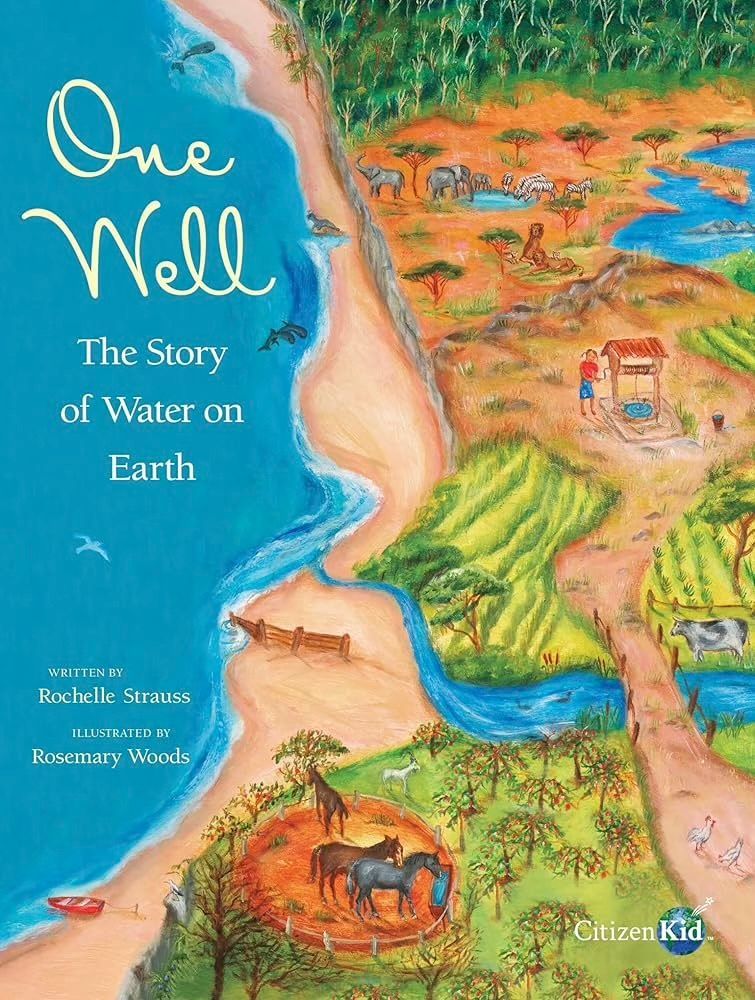

One Well: The Story of Water on Earth

By Rochelle Strauss, Illustrated by Rosemary Woods


Through its clear text and lush illustrations, One Well emphasizes the interconnectedness of water on our planet. It offers an array of interesting information that will appeal to children in elementary years, both through narrative text and short snippets overlaid on the images that fill each page. The fact that this picture book has an index is an indicator of how just how much its 32 pages contains!
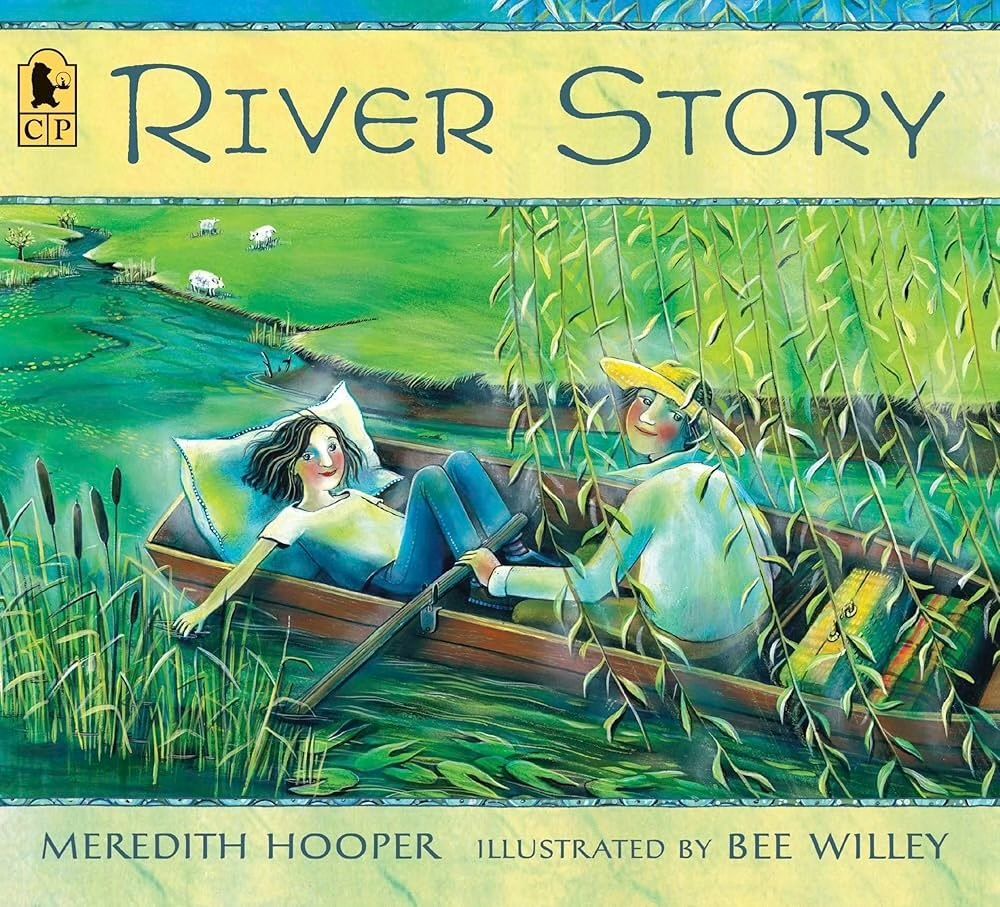

River Story

By Meredith Hooper, Illustrated by Bee Willey


Rich in realistic content yet engaging and accessible, this lushly illustrated picture book takes readers on a journey from the source of the river to where it empties into the sea.
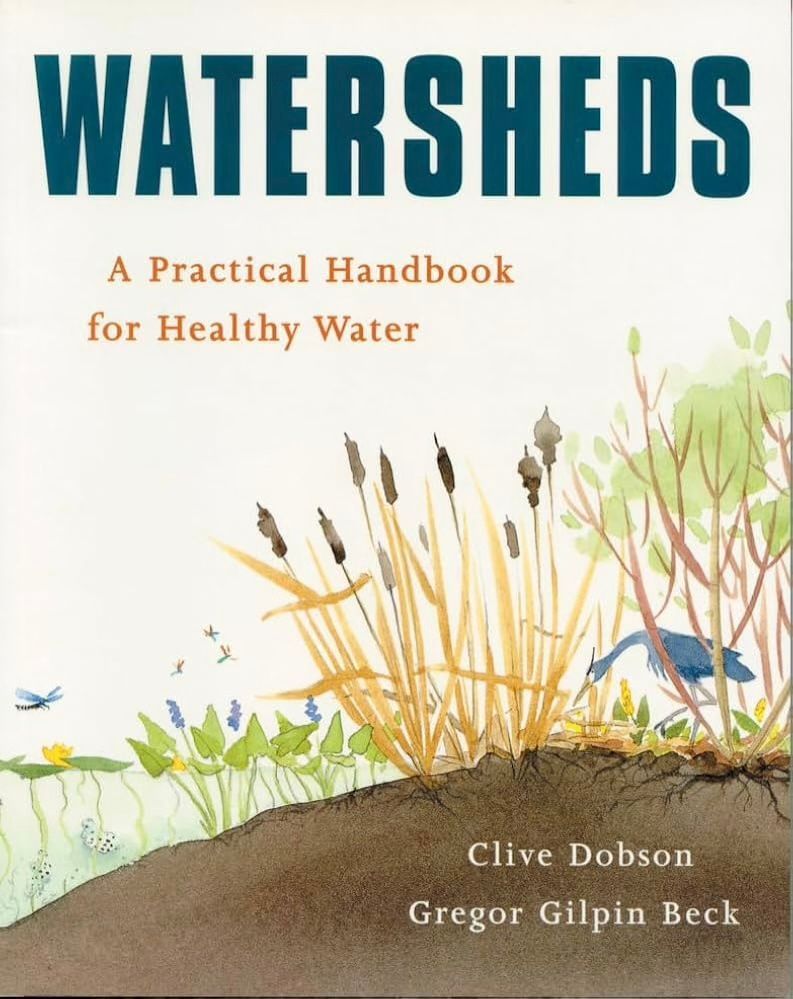

Watersheds: A Practical Handbook for Healthy Water

By Gregor Gilpin Beck, Illustrations by Clive Dobson


Best for older readers, this book offers helpful and non-technical information about watershed concepts and environmental concerns. This is an excellent resource for older elementary or younger adolescents engaged in ecology research. The illustrations are beautiful, too!


Young Adult Fiction
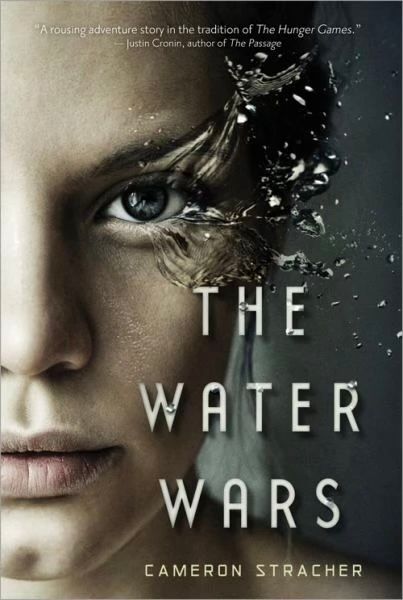

The Water Wars by Cameron Stracher

In a world where water has become a precious resource, Vera and her brother befriend a boy who seems to have unlimited access to water and who suspiciously disappears, prompting a dangerous search challenged by pirates, a paramilitary group, and corporations.


Our Bookshelf selections are meant to spark curiosity, conversation, and a love of reading, not to be comprehensive. We’d love to continue the dialogue with you. If your family has a favorite to add, please email us at discover@wheatonmontessori.org and share your recommendation.


📝 Download the printable list and bring it along on your next visit to your local bookstore or library. Happy reading!
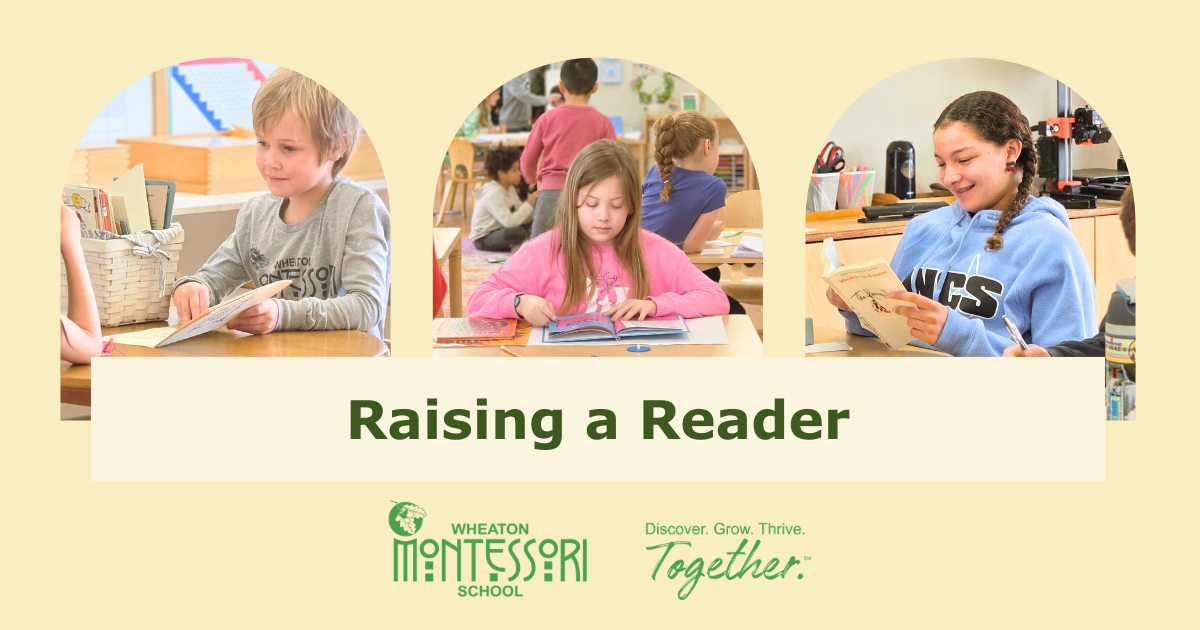
Three children engage in reading activities in a classroom, with text below reading,
By Suzanna Mayhugh, Lower Elementary Teacher April 13, 2026
Without fail, most of my Parent-Teacher Conferences end with a parent asking, “What can we be doing at home?” And without fail, I respond, “Read. Read with them, to them, next to them, near them. Even if they read themselves. Keep them reading.” Reading is a skill that must be practiced, over and over again. Enjoying a book is not a skill that we’re born with in Kingdom Animalia. It’s a skill we learn by watching those around us, modeling reading as young children, trying over and over to find the book that hooks us for life. But what if your child doesn’t love reading? What if it’s a battle at home? Here are a few tips that I’ve learned from my fellow teachers, from my time as a parent, and from observing students in the classroom. Start early! Read to them as soon as you get them home for the first time! Not only does reading at a very early age have language comprehension, memory, and narrative skills implications for later in life, it also helps create a bond and habit early on. Feeling late to the party? Start now! Let them pick books they like. Are they choosing the same book again and again? Great! They’re reading! Are they reading the 8453rd installment of Rainbow Magic Fairies? Good! They’re reading! Diary of a Wimpy Kid? Great! The graphic novel of the comic based on the novel they already read? GREAT! Is your pre-reader paging through Goodnight Moon for the 54th time today? Wonderful. There is so much research showing repeated exposure to the same book supports fluency, automaticity, narrative expression, comprehension, and confidence at all levels of reading. Have books in every room. Like all new skills, without access to the needed tools and equipment, those new skills don’t get practiced. Stock your bedrooms, bathrooms, kitchens, and cars with books. (My family has rules about the dining room table during dinner, but that rule can bend quite quickly when someone is “at a good part.” Assess what they are filling their time with instead of reading. Do they actually have time to read? Is there ever a “down” moment that they would even be able to fill with reading? Often, lack of time is one of the biggest obstacles. If your child wants to be in every after-school class, on the travel teams, or you’re just always coming-and-going, keep books in the car. Load your playlist with audiobooks (yes, they “count” as reading). And here’s where I lose some of you: Is what they are doing instead of reading something your family values? Are they watching videos of other kids playing Minecraft? Are they doom-scrolling at the age of 7? Are they on YouTube Shorts for hours? If so, the chances of them picking up a book, which takes mental work, isn’t high. If you want to help your child love reading, you have to assess what they’re doing instead of reading. Still with me? Make reading a moment for connection. Your children idolize you. They want your attention. They want to feel close to you. Build on that desire. Read to them for as long as they will allow. I promise, your teenager wants these moments. Your three-year-old craves these moments. Make the effort to build it into your routine to read together and guard that moment with all that you have. Let them put down books they don’t like. Do you remember being forced to finish a book in school, just so that you could be quizzed on it? To tell the adult asking you to read it that yes, you’d indeed finished it against your own judgment and free will? Don’t be the one that does that to their reading enjoyment. If they don’t like a book, let them move on to the next one. Is the book they detest your childhood favorite? I see you, I feel you, I’ve been you. It stings when your daughter does NOT feel the same way about Mrs. Piggle-Wiggle as you did in second grade. Even worse when it’s From the Mixed-Up Files of Mrs. Basil E. Frankwieler. Just let them move on. It’s not worth the heartache of trying to convince them. Trust me, I know. Give them variety - and don’t talk down about their favorites. Allow them to read across a wide menu of options: graphic novels, comics, short stories, mysteries, picture books at an older age, a series that makes you want to roll your eyes. Not a fan of graphic novels or comics? Please don’t require “serious reading” before they get to something “fun.” That implies that some reading is automatically a drudgery - which will lead to avoidance altogether. Don’t overlook comics and graphic novels. Leaf through some at the library and see how they’ve evolved over the last decade. Comics are also shown to increase vocabulary, strengthen sequencing skills, and provide art education. Even better, comics and graphic novels can be a bridge for students with dyslexia, autism, and attention challenges. Don’t overlook them as a very helpful, brightly-colored tool in your reader’s toolbox! Remember - the goal is to get them reading to begin with and let them find what they love through the process. When I was a Wheaton Montessori School parent with young primary children, well before I took the AMI Elementary training, their teachers, Ms. Chiste and Mrs. Fortun, recommended “The Rights of the Reader” by Daniel Pennac during several of their parent workshops. I’d like to pass along the recommendation, as it has served my family - and teaching - for years now. Learning to love reading is a skill, just as reading itself is. Research is showing that we’re headed in the wrong direction, with just 1-in-3 public school fourth graders in Illinois reading proficiently, and college students at top universities being unable to follow or complete full books. Your chances and opportunities for “raising readers” are at-hand, so be off with you to the library! https://www.theatlantic.com/magazine/archive/2024/11/the-elite-college-students-who-cant-read-books/679945/ https://www.illinoispolicy.org/literacy-epidemic-hits-illinois-as-fewer-than-1-in-3-students-read-well/
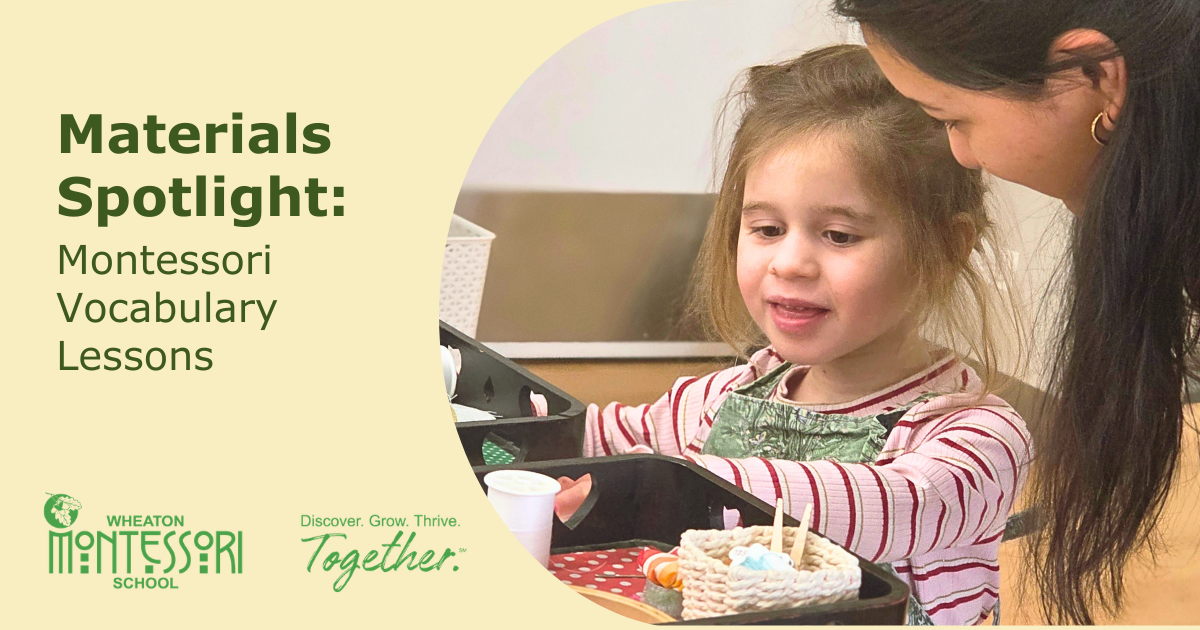
An adult guides a young child during a Montessori vocabulary lesson at a table with small baskets and materials.
By Rebecca Lingo April 6, 2026
Explore the Montessori three-period lesson and how its quiet simplicity unites words and meaning during a child’s sensitive period for language.