At Wheaton Montessori, we talk a lot about the “prepared environment.” Really, though, this concept of a specially prepared environment isn’t limited to our school. In fact, from the earth’s biosphere offering an array of support for life, to the fragrant and colorful flowers existing to lure pollinators, to a tidepool for sea anemones and sea stars – prepared environments are all around us.
A prepared environment has three essential purposes:
- to offer protection
- to provide nourishment
- to stimulate growth
At Wheaton Montessori, our prepared environments are places for children designed to appeal to their developmental characteristics and their innate desires. When designing these prepared spaces for children, we take into consideration how to ensure children feel protected and nourished, so they can reach their potential. Our classrooms are places where children and young adults can feel at home as they develop their inner selves and outer skills.
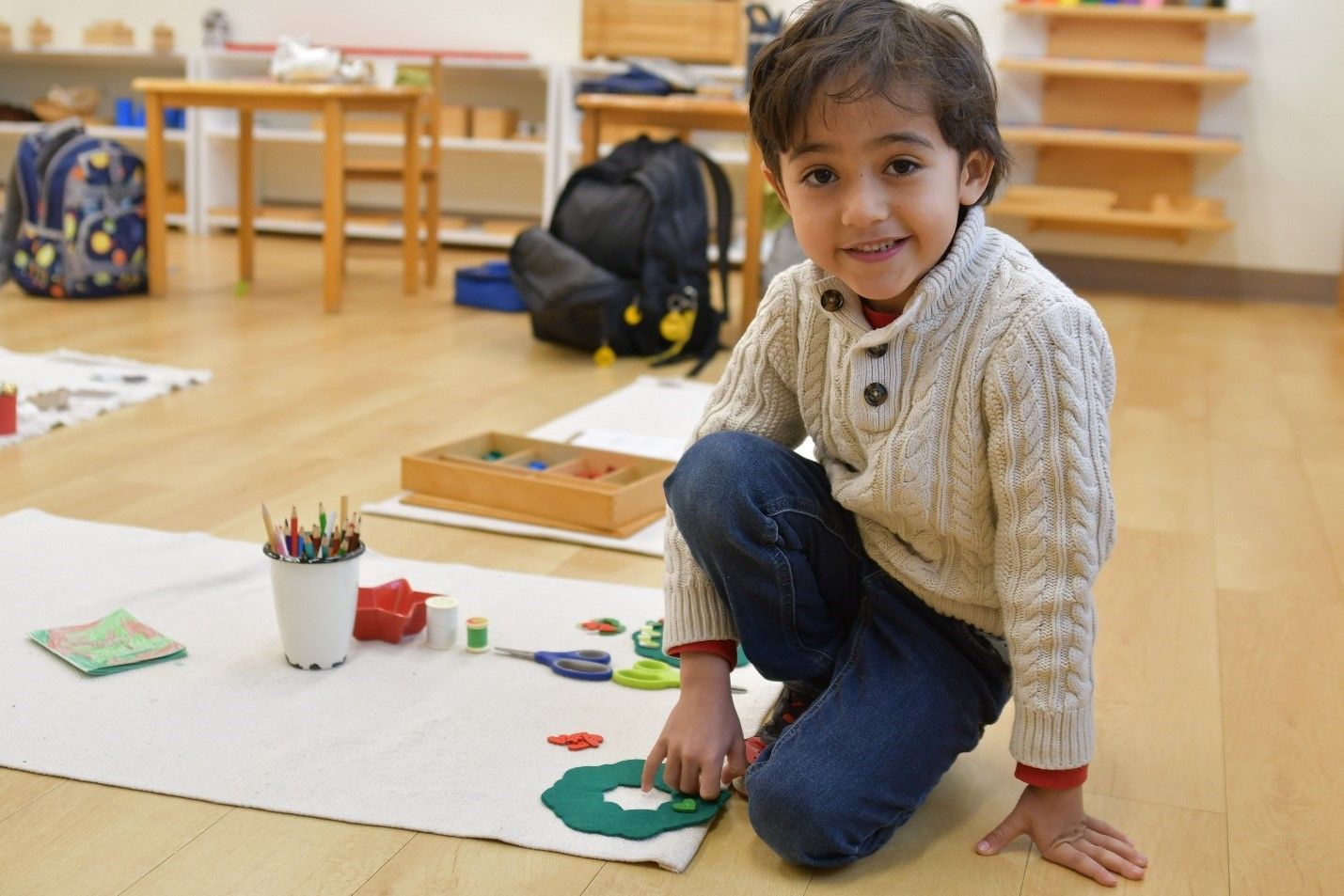
One of the ways we offer safe, home-like educational classrooms, is through our attentiveness to how the physical space is set up to meet developmental needs. The preschool classrooms have small, easy-to-move tables and chairs, as well as plenty of windows that let in bright, inviting light. Large open floor space allows children to work on the floor on rugs and move freely about the classroom. Low, open shelves display orderly arrangements of beautiful materials which invite children to engage with an array of learning activities. The elementary classrooms are not limited to their four walls because of our active “going out” programs. This program takes advantage of the area zoos, museums, forest preserves, and libraries. The adolescent building has varied spaces designed for either instruction, meetings, leisure, and creative work.
Throughout Wheaton Montessori’s campus, the materials on the shelves are aesthetically appealing and have been developed scientifically all over the world. The beauty of the materials and the classroom appeals to the students’ development of an aesthetic sense, while the arrangement of materials from concrete to abstract provides students with a solid sense of order.
In addition to being beautiful, the materials in the environment are real and purposeful. Containers for items even offer different textures and sensorial experiences. Fragile and valuable items help children learn how to handle items with control and care. Plus, having access to beautiful, delicate treasures conveys an essential message of goodwill and trust.
In the beginning, adults assist children in getting their bearings in the classroom and teach the precise use of each material. Teachers provide lessons not just on how to use items but also how to care for them. For example, teachers demonstrate how to carry a porcelain pitcher to preschoolers and microscopes to first graders. The children then have structured freedom to choose what they do and to focus for long periods of time.
Although adults are not the focal point in our classrooms, adults are of prime importance. The teachers are acutely alert to what is happening. In addition to this presence and awareness, adults in Internationally recognized Montessori classrooms like our must prepare themselves in profound ways. They have extensive intellectual and practical training to be able to link children with different aspects of the learning environment and training in how to assess each students’ understanding of the educational materials. The teachers also model how to have a peaceful environment where everyone is respected and able to communicate even about difficult subjects.
In addition to this psychological safety, our prepared environments focus on the importance and value of living things and outdoor spaces so children can keep and develop their connection to nature. Our campus includes multiple gardens in which children can sow seeds, care for living things, and participate in harvesting the fruits of their work. Our elementary and adolescents have access to the campus’s one acre wetland. The indoor and outdoor spaces blend with plants and animals as integral aspects of the classroom thanks to the architecture of our windows. Wheaton Montessori teachers consider this connection to nature to be an essential part of education and our campus has been designed specifically to fulfill our dreams.
The connection to nature both in and out of doors, the arrangement of open space with child-sized furniture, the ordered and aesthetic materials, and the centrality of children with adults offering background support, all provide children with the protection and nourishment they need to develop independence and active engagement.
Children at Wheaton Montessori love and care for their learning spaces! Please schedule your visit to our campus to see how the classrooms are perfect for your family too! Come imagine your child joining these prepared environments as they continue to grow and develop their understanding of the world.
To RSVP for our Parent Discovery Night on Thursday, December 19 at 6:00pm please follow this link.